
Sentinel Lymph Node Biopsy in Gurgaon


Sentinel Lymph Node Biopsy (SLNB) is a procedure used to check whether breast cancer has spread from the primary tumour to the nearby lymph nodes in the armpit. It involves identifying and removing the sentinel lymph nodes, which are the first lymph nodes that cancer cells are most likely to reach through the lymphatic system.
It is commonly considered for patients with early-stage breast cancer when there is no clear evidence of lymph node involvement on clinical examination or imaging.
Dr. Mansi Chowhan is an Oncoplastic Breast Surgeon in Gurgaon with specialized training in breast cancer surgery and oncoplastic procedures. Sentinel lymph node assessment may be performed as part of an individual's breast cancer surgery when clinically appropriate.
What Is a Sentinel Lymph Node?
The lymphatic system drains fluid from the breast toward lymph nodes, particularly those in the armpit.
The sentinel lymph nodes are the first draining nodes from the area of the breast containing the tumour. If cancer has started to spread through the lymphatic system, these nodes are among the first places where cancer cells may be found.
Instead of removing many lymph nodes, sentinel lymph node biopsy allows the surgeon to examine a smaller number of key nodes.

Why Is Sentinel Lymph Node Biopsy Performed?
The main purpose of SLNB is to determine whether cancer cells have reached the lymph nodes.
The information can help the breast cancer team:
- Determine the stage of the cancer
- Assess the extent of disease
- Plan further treatment
- Decide whether additional lymph node surgery is necessary in selected situations
- Avoid unnecessary removal of multiple lymph nodes when it is not required
SLNB is not required for every breast cancer patient. The decision depends on the type and stage of cancer and other clinical factors.
Who May Need Sentinel Lymph Node Biopsy?
SLNB may be recommended for selected patients with invasive breast cancer when the axillary lymph nodes do not appear involved based on clinical assessment and available imaging.
It may be performed during:
- Breast-conserving surgery
- Mastectomy
- Certain other breast cancer operations
The indications can differ depending on the cancer subtype, stage, age, planned surgery and treatment approach.

How Is Sentinel Lymph Node Biopsy Performed?
The procedure is generally performed during the same operation as breast cancer surgery.
1. Sentinel Node Mapping
A tracer is injected to identify the lymphatic pathway from the breast to the sentinel lymph nodes.
Depending on the surgical approach, a radioactive tracer, blue dye, or both may be used.
2. Identification of Sentinel Nodes
The surgeon follows the tracer to identify the first draining lymph nodes.
3. Removal of the Nodes
Usually a small number of sentinel nodes are removed through the surgical incision or a separate small incision near the armpit.
4. Pathology Examination
The removed lymph nodes are sent to the laboratory where they are examined for cancer cells.
5. Further Treatment Planning
The pathology results are considered alongside the breast tumour characteristics to determine the next steps in treatment.
What Happens If the Sentinel Node Is Positive?
Finding cancer cells in a sentinel lymph node does not automatically mean that a complete axillary lymph node dissection is required.
The appropriate next step depends on factors such as:
- Number of affected nodes
- Size of the cancer deposit
- Type and stage of breast cancer
- Type of breast surgery performed
- Planned radiotherapy
- Other treatments being given
In selected patients, no further axillary surgery may be necessary. Your breast cancer team will determine the appropriate approach based on the complete clinical picture.
Sentinel Lymph Node Biopsy vs Axillary Lymph Node Dissection
These are different procedures.
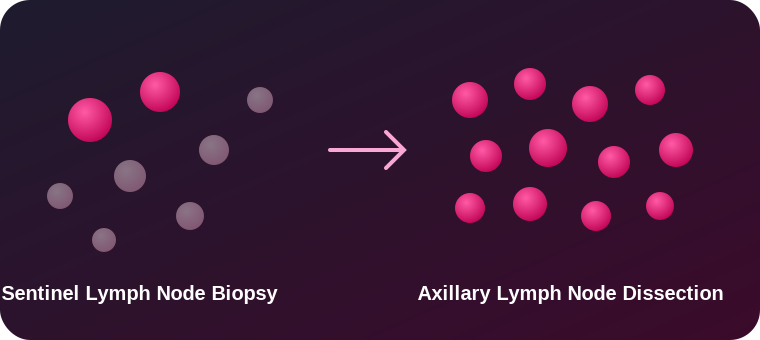
| Sentinel Lymph Node Biopsy | Axillary Lymph Node Dissection |
|---|---|
| Removes a small number of key lymph nodes | Removes a larger number of lymph nodes |
| Used to assess whether cancer has spread | Used when more extensive lymph node treatment is indicated |
| Generally less extensive surgery | More extensive axillary surgery |
| Usually associated with a lower risk of lymphoedema | Higher risk of lymphoedema |
| Often performed during breast cancer surgery | May be performed when clinically indicated |
The appropriate procedure depends on the patient's diagnosis and lymph node status.
Benefits of Sentinel Lymph Node Biopsy
For appropriately selected patients, SLNB can:
- Provide important staging information
- Help guide further treatment
- Reduce the need for extensive lymph node surgery
- Usually involve a smaller surgical area
- Reduce the risk of complications associated with more extensive axillary surgery
The procedure is performed only when its information is clinically useful.
Recovery After Sentinel Lymph Node Biopsy
SLNB is often performed during the same operation as breast cancer surgery, so recovery depends on the complete procedure.
Some patients may experience:
- Mild pain or tenderness
- Swelling
- Bruising
- Temporary numbness around the breast or armpit
- Limited shoulder movement for a short period
Your surgeon will provide instructions regarding wound care, exercise and physical activity.
Possible Risks and Complications
Although SLNB is generally less extensive than axillary lymph node dissection, possible complications include:
- Bleeding
- Infection
- Seroma
- Pain or tenderness
- Numbness or altered sensation
- Shoulder stiffness
- Lymphoedema, although the risk is generally lower than with complete axillary dissection
- Reaction to the tracer or dye in uncommon cases
If blue dye is used, temporary skin or urine discoloration can sometimes occur.

Sentinel Lymph Node Biopsy in Gurgaon
Sentinel Lymph Node Biopsy in Gurgaon is generally considered as part of breast cancer surgery when assessment of the axillary lymph nodes is required.
Dr. Mansi Chowhan is an Oncoplastic Breast Surgeon in Gurgaon with advanced training in breast cancer and oncoplastic surgery, including MCh Breast Oncoplasty (UK) and fellowship training in breast surgery in Paris and at IFHNOS-MSKCC, New York.
The need for SLNB is determined after reviewing the patient's examination, imaging, biopsy results, cancer characteristics and planned breast surgery.
Sentinel Lymph Node Biopsy Cost in Gurgaon
The cost of sentinel lymph node biopsy varies depending on whether it is performed along with breast cancer surgery and what type of mapping and pathology are required.
Factors may include:
- Surgeon and anaesthesia fees
- Hospital charges
- Tracer or dye used for mapping
- Pathology
- Imaging and investigations
- Breast surgery performed at the same time
- Hospital stay
A personalized estimate can be provided after assessment and treatment planning.
Frequently Asked Questions
What is a sentinel lymph node biopsy?
It is a procedure that removes the first lymph nodes draining the breast tumour so they can be examined for cancer cells.
Is sentinel lymph node biopsy painful?
The procedure is performed under anaesthesia, so you should not feel the surgery itself. Some soreness or tenderness can occur during recovery.
How many lymph nodes are removed during SLNB?
The number varies between patients. Usually, only the identified sentinel nodes are removed rather than a large group of axillary lymph nodes.
Does everyone with breast cancer need SLNB?
No. The need depends on the type and stage of breast cancer, lymph node findings and the planned treatment.
What happens if the sentinel lymph node is negative?
A negative result means no cancer was identified in the examined sentinel nodes. Your overall treatment plan will still depend on the characteristics of the breast tumour.
What happens if the sentinel lymph node is positive?
The result is evaluated along with the patient's cancer characteristics and type of surgery. Some patients may require additional lymph node treatment, while others may not.
Is SLNB performed during mastectomy?
It may be recommended during mastectomy for appropriate patients, depending on the type and stage of breast cancer.
What is the difference between SLNB and axillary lymph node dissection?
SLNB removes a small number of sentinel nodes for assessment. Axillary lymph node dissection removes a larger number of lymph nodes when more extensive treatment is indicated.
Can SLNB cause lymphoedema?
There is a risk, but it is generally lower than after axillary lymph node dissection.
How soon can I return to normal activities?
Recovery depends on the breast surgery performed at the same time. Your surgeon can provide specific guidance based on your procedure and recovery.