
Bilateral Prophylactic Mastectomy Reconstruction in Gurgaon


Bilateral Prophylactic Mastectomy Reconstruction combines risk-reducing removal of breast tissue from both breasts with breast reconstruction, either during the same operation or as part of a planned staged approach.
Bilateral prophylactic mastectomy, also called bilateral risk-reducing mastectomy, may be considered for selected women who have a substantially increased risk of developing breast cancer. This can include some women with inherited genetic mutations or a particularly strong personal or family history of breast cancer.
The decision is highly individual. It usually involves genetic counselling, breast cancer risk assessment and discussion of alternatives such as enhanced screening.
Dr. Mansi Chowhan is an Oncoplastic Breast Surgeon in Gurgaon with specialised training in breast cancer and oncoplastic surgery. Where risk-reducing mastectomy is appropriate, reconstruction can be discussed as part of the overall surgical plan.
What Is Bilateral Prophylactic Mastectomy?
Bilateral prophylactic mastectomy involves removing breast tissue from both breasts to reduce the future risk of breast cancer.
It is different from a therapeutic mastectomy, which is performed to treat an already diagnosed breast cancer.
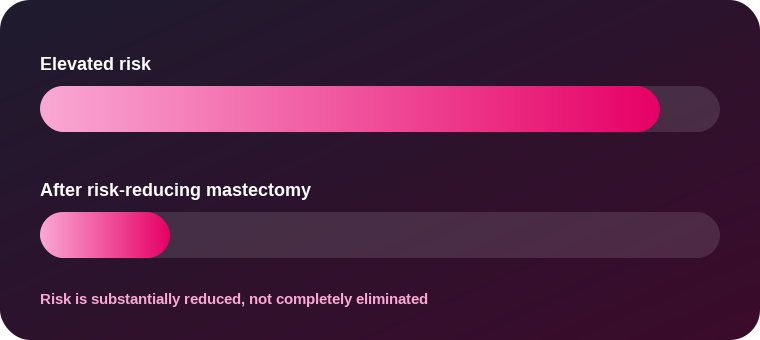
The term "prophylactic" is also increasingly described as risk-reducing, because the procedure substantially lowers risk but does not eliminate the possibility of breast cancer completely.
Who May Consider Bilateral Risk-Reducing Mastectomy?
Risk-reducing mastectomy may be discussed with women who have a significantly elevated risk of breast cancer.
Possible situations include:
- Certain inherited pathogenic genetic variants associated with increased breast cancer risk
- Strong family history of breast cancer
- Previous breast cancer combined with a high risk of cancer developing in the opposite breast
- Certain high-risk clinical or genetic circumstances
Not everyone with a family history or genetic mutation will require prophylactic mastectomy.
The decision should follow an individual risk assessment rather than being based on family history alone.
Why Is Genetic Testing Important?
For some women, genetic testing can provide important information about inherited breast cancer risk.
Depending on the clinical and family history, testing may assess genes associated with hereditary breast and ovarian cancer and other inherited cancer syndromes.
Genetic counselling can help explain:
- What a genetic result means
- The individual's estimated cancer risk
- Implications for family members
- Screening options
- Risk-reducing surgery
- Other risk-management strategies
Genetic testing should be interpreted in the context of personal and family history.
Bilateral Prophylactic Mastectomy With Reconstruction
When risk-reducing mastectomy is chosen, reconstruction can often be planned at the same time.
The main reconstructive options include:
Implant-Based Reconstruction
Breast implants can be used to recreate the breast mound after breast tissue has been removed.
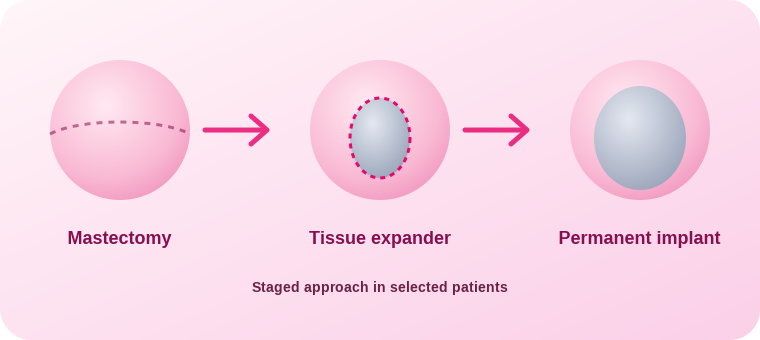
In selected patients, a staged approach using tissue expanders may be recommended before placement of permanent implants.
Autologous Reconstruction
The patient's own tissue can be used to create the breast.
Depending on body anatomy and suitability, tissue may be taken from areas such as the abdomen, back or thigh.
Combination Reconstruction
In some cases, an implant and the patient's own tissue may be used together.
The choice depends on anatomy, previous surgery, medical history and the patient's preferences.
Immediate vs Delayed Reconstruction
Immediate Reconstruction
The reconstruction is started during the same operation as bilateral mastectomy.
This can allow the breast shape to be recreated immediately after breast tissue removal.
Delayed Reconstruction
Reconstruction is performed at a later stage.
This may be chosen for medical, personal or surgical reasons.
Because risk-reducing mastectomy is not necessarily followed by chemotherapy or radiotherapy, some women may have more reconstructive options than patients undergoing mastectomy for active breast cancer. However, suitability must still be assessed individually.
Nipple-Sparing Prophylactic Mastectomy
In appropriately selected women, nipple-sparing mastectomy may be an option.
This technique removes breast tissue while preserving the nipple-areola complex and most of the breast skin.
Potential suitability depends on factors such as:
- Breast anatomy
- Breast size and shape
- Genetic and cancer risk
- Nipple-related findings
- Previous breast surgery
- Smoking and other health factors
The preserved nipple is not guaranteed to have normal sensation or function after surgery.

How Is Bilateral Prophylactic Mastectomy Reconstruction Planned?
1. Risk Assessment
The patient's personal and family history is reviewed along with genetic testing, when appropriate.
2. Breast Evaluation
Clinical examination and appropriate imaging are performed before surgery.
3. Reconstructive Consultation
The surgeon discusses implant-based and tissue-based reconstruction options.
4. Surgical Planning
The type of mastectomy and reconstructive approach are planned together.
If nipple-sparing or skin-sparing surgery is being considered, the breast anatomy and individual risk factors are carefully assessed.
5. Mastectomy
Breast tissue is removed from both breasts using the planned surgical technique.
6. Reconstruction
The selected reconstructive procedure is performed either immediately or as part of a staged approach.
7. Follow-Up
The patient is monitored for healing, reconstruction-related complications and long-term breast health.
Benefits of Risk-Reducing Mastectomy With Reconstruction
For appropriately selected high-risk women, bilateral prophylactic mastectomy can substantially reduce the risk of developing breast cancer.
Reconstruction may also:
- Recreate the breast mound
- Maintain body symmetry
- Avoid a prolonged period without breasts after mastectomy
- Provide options for preserving the breast skin envelope in selected cases
- Support body image and personal preferences
However, risk-reducing surgery is a major decision and has potential complications. It should not be considered a routine alternative to screening for everyone.
Does Prophylactic Mastectomy Completely Prevent Breast Cancer?
No.
Bilateral risk-reducing mastectomy can substantially reduce breast cancer risk, but it cannot remove every breast tissue cell.
A small amount of breast tissue may remain in areas such as the skin, nipple region or chest wall.
The procedure therefore reduces risk rather than guaranteeing complete prevention.
Possible Risks and Complications
Bilateral mastectomy and reconstruction are major surgical procedures.
Potential complications include:
- Bleeding
- Infection
- Seroma
- Wound-healing problems
- Changes in breast sensation
- Scarring
- Breast asymmetry
- Implant-related complications
- Capsular contracture with implants
- Loss of skin or nipple tissue in selected procedures
- Flap complications with autologous reconstruction
- Need for additional or revision surgery
The specific risks depend on the mastectomy and reconstruction technique.
Recovery After Bilateral Prophylactic Mastectomy Reconstruction
Recovery depends on the type of reconstruction.
Patients may experience:
- Chest tightness
- Pain or discomfort
- Swelling
- Bruising
- Temporary changes in sensation
- Fatigue
- Restricted arm movement during the early recovery period
Recovery after autologous reconstruction may be longer because tissue is taken from another part of the body.
Your surgical team will provide guidance regarding wound care, physical activity and follow-up.
Alternatives to Bilateral Prophylactic Mastectomy
Risk-reducing mastectomy is not the only option for women at increased breast cancer risk.
Depending on individual risk, alternatives may include:
- Enhanced breast screening
- Regular clinical assessment
- Genetic counselling
- Risk-reducing medications in appropriate patients
- Lifestyle and other risk-management measures
The appropriate strategy depends on the individual's estimated risk and personal preferences.

Bilateral Prophylactic Mastectomy Reconstruction in Gurgaon
Bilateral Prophylactic Mastectomy Reconstruction in Gurgaon involves planning both risk-reducing breast surgery and reconstruction around the patient's individual anatomy and cancer risk.
Dr. Mansi Chowhan is an Oncoplastic Breast Surgeon in Gurgaon with advanced training in breast oncoplasty and breast surgery, including MCh Breast Oncoplasty (UK) and fellowship training in breast surgery in Paris and at Memorial Sloan Kettering Cancer Center, New York.
The decision for risk-reducing mastectomy should follow appropriate risk assessment and counselling. Reconstruction options can then be discussed according to the patient's anatomy, expectations and surgical suitability.
Bilateral Prophylactic Mastectomy Reconstruction Cost in Gurgaon
The cost varies according to the type of mastectomy, reconstruction technique and whether reconstruction is performed in one or multiple stages.
Factors may include:
- Surgeon and anaesthesia charges
- Hospital and operating room charges
- Type of reconstruction
- Implant or tissue flap requirements
- Genetic testing and preoperative investigations
- Pathology
- Hospital stay
- Additional reconstructive procedures
- Follow-up and revision surgery when required
A personalised estimate can be provided after assessment and selection of the surgical approach.
Frequently Asked Questions
What is bilateral prophylactic mastectomy?
It is surgery to remove breast tissue from both breasts to substantially reduce future breast cancer risk in selected high-risk women.
Is prophylactic mastectomy the same as breast cancer surgery?
No. Prophylactic or risk-reducing mastectomy is performed to reduce future cancer risk, while therapeutic mastectomy is performed to treat an existing breast cancer.
Who should consider bilateral prophylactic mastectomy?
It may be discussed with women who have a substantially elevated breast cancer risk, including some women with inherited genetic variants or significant hereditary risk.
Can reconstruction be performed during prophylactic mastectomy?
Yes. Immediate reconstruction can be performed in appropriately selected patients, although delayed reconstruction is also possible.
Can the nipples be preserved?
Nipple-sparing mastectomy may be possible for selected patients. Suitability depends on anatomy, risk factors and clinical findings.
Does prophylactic mastectomy completely eliminate breast cancer risk?
No. It substantially reduces risk but cannot remove every breast tissue cell.
Is genetic testing required before prophylactic mastectomy?
Not necessarily in every case, but genetic and hereditary risk assessment can be important when considering risk-reducing surgery.
What are the reconstruction options?
Options include implant-based reconstruction, autologous reconstruction using the patient's own tissue and, in selected cases, a combination of both.
How long does recovery take?
Recovery depends on the mastectomy and reconstruction technique. Autologous reconstruction generally involves a longer recovery than simpler implant-based procedures.
Will I still need breast screening after prophylactic mastectomy?
Routine breast screening requirements may change substantially after bilateral mastectomy, but follow-up remains important. Your doctor will advise you based on the amount of tissue removed, surgical technique and individual risk.