
Palliative Mastectomy in Gurgaon

Palliative Mastectomy is a breast surgery performed to relieve significant symptoms caused by advanced breast cancer when removing the breast tumour may help improve comfort, wound care or quality of life.
Unlike mastectomy performed as part of treatment intended to remove all known breast cancer, palliative mastectomy is primarily focused on symptom control and local disease management.
It may be considered when a breast tumour has become ulcerated, bleeding, infected, painful or difficult to manage with other treatments.
Dr. Mansi Chowhan is an Oncoplastic Breast Surgeon in Gurgaon with specialised training in breast cancer surgery. Treatment decisions are made individually, considering the patient's cancer, symptoms, overall health and ongoing systemic treatment.
What Is Palliative Mastectomy?
Palliative mastectomy involves surgical removal of the affected breast when the local tumour is causing significant symptoms that cannot be adequately controlled with other measures.
The primary goal is not necessarily to eliminate all cancer from the body. Instead, surgery may help manage troublesome local symptoms and improve day-to-day comfort.

Depending on the individual situation, symptoms may include:
- Persistent breast pain
- Bleeding from an ulcerated tumour
- Foul-smelling or infected wounds
- Recurrent wound discharge
- Difficulty with wound care
- Skin breakdown
- Large or fungating breast tumours
- Local symptoms that significantly affect quality of life
When Is Palliative Mastectomy Considered?
Palliative surgery is generally considered only after careful evaluation.
It may be discussed when:
- The breast tumour is causing substantial local symptoms
- Wound care has become difficult
- There is persistent bleeding
- Infection or discharge cannot be adequately controlled
- Pain from the breast tumour is significant
- Other local treatments have not provided sufficient symptom relief
- The expected benefits of surgery outweigh the risks
The decision is particularly important in advanced or metastatic breast cancer, where systemic treatment remains an important part of overall care.
Palliative Mastectomy vs Standard Mastectomy
Although both procedures involve removal of breast tissue, their treatment goals can be different.
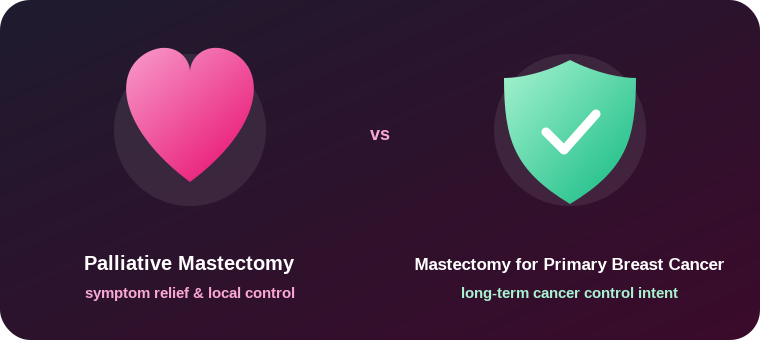
| Palliative Mastectomy | Mastectomy for Primary Breast Cancer |
|---|---|
| Primarily focused on symptom relief and local control | May be performed as part of treatment intended to achieve long-term cancer control |
| Often considered in advanced or metastatic disease | Commonly performed for selected localised or locally advanced breast cancers |
| May address bleeding, pain, infection or ulceration | Focuses on removing the primary breast tumour |
| Decision considers quality of life and overall disease status | Decision depends on tumour characteristics and treatment strategy |
| Usually part of a broader multidisciplinary treatment plan | May be combined with other curative-intent treatments |
The distinction is based on the intent of treatment, not simply the type of operation.
How Is Palliative Mastectomy Performed?
The surgical approach depends on the size and extent of the tumour and the patient's overall condition.
1. Comprehensive Assessment
The breast cancer team reviews the patient's symptoms, imaging, pathology and previous treatments.
The overall extent of disease and current systemic treatment are also considered.
2. Surgical Planning
The surgeon evaluates the breast tumour and surrounding tissues to determine whether surgery is technically appropriate.
The aim is to plan an operation that can address the problematic local disease while considering recovery and overall health.
3. Removal of the Affected Breast Tissue
The affected breast is removed using the planned surgical approach.
The extent of additional tissue removal depends on the local disease and surgical objective.
4. Wound Management
Particular attention may be given to wound closure and postoperative wound care, especially when the tumour has caused skin breakdown or infection.
5. Pathological Examination
The removed tissue may be sent for pathological examination to provide additional information about the local disease.
Can Palliative Mastectomy Help With Fungating Breast Cancer?
In selected patients, yes.
A fungating breast tumour may cause an open wound, bleeding, discharge, odour and significant difficulty with daily wound care.
Palliative treatment may involve a combination of:
- Wound care
- Dressings
- Antibiotics when clinically indicated
- Pain management
- Radiation therapy
- Systemic cancer treatment
- Surgery in selected patients
Palliative mastectomy is not appropriate for every fungating breast tumour. The potential benefits and surgical risks need to be assessed carefully.
Palliative Mastectomy for Bleeding Breast Tumours
Advanced breast tumours can sometimes bleed because of ulceration and involvement of the skin or nearby blood vessels.
If bleeding becomes difficult to control, the multidisciplinary team may consider different approaches, which can include wound care, radiotherapy, medication or surgery.
Palliative mastectomy may be considered in selected cases when removing the affected breast is expected to provide meaningful local symptom control.
Palliative Mastectomy and Pain Relief
Pain from an advanced breast tumour can result from ulceration, infection, inflammation or pressure on surrounding tissues.
Palliative mastectomy may reduce pain when the breast tumour itself is the main source of local symptoms.
However, pain in advanced cancer can have multiple causes. Pain management may therefore involve medications, radiotherapy, systemic treatment and specialist palliative care in addition to or instead of surgery.
What Are the Goals of Palliative Mastectomy?
The goals may include:
- Controlling local breast symptoms
- Reducing tumour-related pain
- Controlling bleeding
- Managing recurrent infection or discharge
- Making wound care easier
- Reducing the burden of a large ulcerated tumour
- Improving comfort and daily quality of life
The expected benefit should be discussed before surgery so that the patient and family understand what the operation is intended to achieve.
Recovery After Palliative Mastectomy
Recovery depends on the patient's overall health, extent of local disease and the complexity of surgery.
Patients may experience:
- Pain or tightness around the surgical area
- Fatigue
- Swelling
- Temporary drainage from the wound
- Reduced mobility while healing
Patients with advanced cancer may have additional factors affecting recovery, including previous chemotherapy, radiotherapy, nutritional status or other medical conditions.
The surgical and oncology teams coordinate follow-up according to the patient's individual needs.
Possible Risks and Complications
Palliative mastectomy is still major surgery and may carry risks such as:
- Bleeding
- Infection
- Wound healing problems
- Seroma
- Pain
- Skin or tissue breakdown
- Delayed recovery
- Blood clots
- Anaesthesia-related complications
The risk may be higher in some patients with advanced cancer, particularly when they have received previous treatments or have poor nutritional or general health status.
A careful assessment is therefore important before deciding on surgery.
Is Palliative Mastectomy a Cure for Advanced Breast Cancer?
No. Palliative mastectomy is primarily performed for symptom control and local disease management.
When breast cancer has spread to distant organs, surgery on the breast does not by itself remove cancer from those other sites.
Systemic cancer treatment and other supportive treatments may continue before or after surgery according to the patient's overall treatment plan.
Role of the Multidisciplinary Cancer Team
Palliative mastectomy is best considered as part of a multidisciplinary approach.
The treatment team may include:
- Breast surgeon
- Medical oncologist
- Radiation oncologist
- Palliative care specialist
- Radiologist
- Pathologist
- Wound care professionals
- Specialist nurses
The team considers both cancer control and the patient's comfort, preferences and overall goals of care.


Palliative Mastectomy in Gurgaon
Palliative Mastectomy in Gurgaon may be considered for selected patients with advanced breast cancer when the primary breast tumour is causing significant local symptoms.
Dr. Mansi Chowhan is an Oncoplastic Breast Surgeon in Gurgaon with advanced training in breast cancer and oncoplastic surgery, including MCh Breast Oncoplasty (UK) and fellowship training in breast surgery in Paris and at Memorial Sloan Kettering Cancer Center, New York.
The decision to proceed with surgery is based on the patient's symptoms, extent of disease, previous treatment, overall health and the expected impact on quality of life.
Palliative Mastectomy Cost in Gurgaon
The cost of palliative mastectomy varies depending on the complexity of the operation and the patient's overall treatment requirements.
Factors may include:
- Surgeon and anaesthesia charges
- Hospital and operating room costs
- Preoperative investigations
- Pathology
- Wound management
- Hospital stay
- Additional oncology or supportive care
A personalised estimate can be discussed after clinical assessment and surgical planning.
Frequently Asked Questions
What is palliative mastectomy?
Palliative mastectomy is removal of the affected breast primarily to relieve significant symptoms caused by advanced breast cancer, such as pain, bleeding, infection or an ulcerated tumour.
Is palliative mastectomy a curative surgery?
Usually, no. Its primary purpose is symptom control and local management rather than eliminating cancer throughout the body.
Who may benefit from palliative mastectomy?
Selected patients with advanced breast cancer and troublesome local breast symptoms may benefit. The decision depends on the patient's overall condition and expected benefit from surgery.
Can palliative mastectomy stop bleeding from a breast tumour?
It may help control tumour-related bleeding in selected patients, but other treatments such as radiotherapy, wound care or medication may also be considered.
Can it be used for a fungating breast tumour?
It can be considered in selected cases, but not every fungating tumour is suitable for surgery. The cancer team evaluates the extent of disease, symptoms and surgical risks.
Will chemotherapy or other cancer treatment continue after surgery?
It may. Palliative mastectomy is often part of a broader treatment plan, and systemic treatment may continue depending on the patient's cancer and overall condition.
How long does recovery take?
Recovery varies significantly depending on the extent of disease, type of surgery and the patient's overall health.
Is lymph node surgery always performed with palliative mastectomy?
No. The need for lymph node surgery depends on the purpose and extent of the operation and the patient's individual circumstances.
Can palliative mastectomy improve quality of life?
The goal of the procedure is to relieve troublesome local symptoms and potentially make wound care and daily activities easier. Whether it will provide meaningful benefit varies between patients.
Is palliative mastectomy suitable for everyone with advanced breast cancer?
No. Some patients may benefit more from systemic treatment, radiotherapy, wound care, pain management or other supportive approaches. The decision should be individualised.